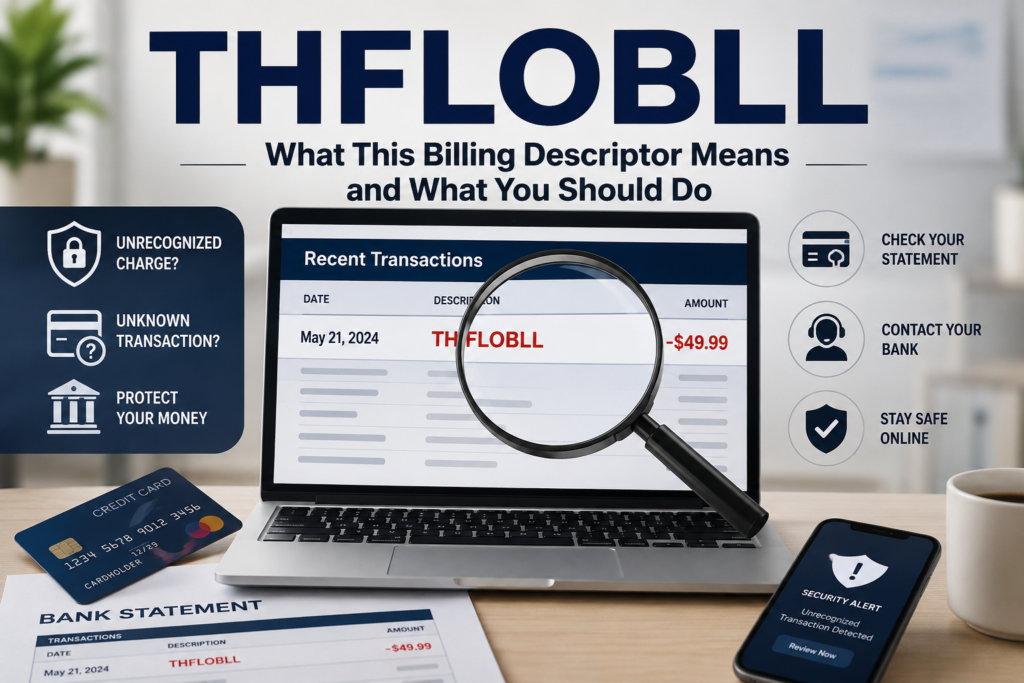

THFLOBLL is an unfamiliar billing descriptor that has been reported by some consumers on bank and credit card statements. At the time of writing, it is not publicly identified as the official name of a well-known bank, financial institution, or major retailer. Instead, it appears to function as a transaction descriptor that may be linked to a merchant, payment processor, or online subscription service. Because billing descriptors are often abbreviated, they don’t always clearly identify the company behind the charge.
Why Does THFLOBLL Appear on a Bank Statement?
There are several reasons why THFLOBLL might show up on your statement. A business may use a different legal or processing name than its public brand, a third-party payment processor may handle the transaction, or a recurring subscription may renew automatically. In some situations, an unfamiliar descriptor could also be connected to an unauthorized transaction, which is why reviewing the details carefully is always recommended.
Is THFLOBLL a Scam?
The presence of THFLOBLL on a statement does not automatically mean you’ve been scammed. There is currently no verified public evidence identifying THFLOBLL itself as a confirmed scam operation. However, if you do not recognize the charge, cannot match it to any recent purchase, or notice repeated billing, you should treat it as a potentially unauthorized transaction until your bank or card issuer confirms its origin.
How to Verify a THFLOBLL Charge
The easiest way to verify a THFLOBLL transaction is to review your recent purchases, search your email for receipts, and check whether you’ve signed up for any free trials or subscription services. If you still can’t identify the payment, contact your bank or credit card provider. Financial institutions can often access additional merchant information that isn’t visible on your monthly statement.
What to Do If You Don’t Recognize THFLOBLL
If you believe the THFLOBLL charge is unfamiliar, contact your bank or credit card issuer as soon as possible. Explain that you don’t recognize the billing descriptor and ask for additional merchant details. If the transaction cannot be verified, request that the charge be disputed and discuss whether replacing your card is appropriate to prevent further unauthorized transactions.
Can Recurring Charges Be Linked to THFLOBLL?
Some consumers report seeing THFLOBLL more than once, which may indicate a recurring payment rather than a one-time purchase. Subscription renewals for digital services, memberships, or online platforms often use billing descriptors that differ from the company name customers recognize. Confirming whether you have an active subscription is an important step before assuming the transaction is fraudulent.
How Banks Handle Unknown Billing Descriptors
Banks and credit card companies regularly investigate unfamiliar billing descriptors because merchant names often appear differently during payment processing. Customer service representatives can usually identify the merchant behind the charge, explain when the payment was authorized, and assist with filing a dispute if necessary. Acting quickly improves the chances of resolving unauthorized transactions without additional financial loss.
Tips to Protect Yourself from Unauthorized Charges
Monitoring your account regularly is one of the best ways to catch suspicious transactions early. Setting up instant transaction alerts, using strong passwords for online accounts, enabling two-factor authentication, and reviewing monthly statements carefully can help reduce the risk of unauthorized activity. Even when a billing descriptor looks unfamiliar, verifying the details before assuming fraud is always the smartest approach.
Why Billing Descriptors Can Be Confusing
Many businesses operate under legal company names that differ from the brands customers see online or in stores. Payment processors may also shorten merchant names to fit bank statement limits, making descriptors difficult to recognize. This explains why legitimate purchases sometimes appear under names that seem completely unrelated to the original transaction.
Conclusion
Finding THFLOBLL on your bank or credit card statement can certainly raise questions, but the billing descriptor alone does not confirm fraud. It may simply represent a merchant or payment processor using an abbreviated name. The safest approach is to review your recent purchases, check for subscription renewals, and contact your financial institution if you cannot identify the transaction. Taking prompt action helps protect your finances while ensuring any unauthorized charges are addressed quickly.
Frequently Asked Questions
1. What does THFLOBLL mean on a bank statement?
THFLOBLL appears to be an unfamiliar billing descriptor rather than the name of a bank or credit card company. It may represent a merchant or payment processor.
2. Is THFLOBLL a legitimate company?
There is no publicly verified information identifying THFLOBLL as a well-known company or financial institution.
3. Should I dispute a THFLOBLL charge?
If you do not recognize the transaction after checking your purchases and subscriptions, contact your bank to investigate and dispute the charge if necessary.
4. Can THFLOBLL be a subscription payment?
Yes. Some recurring subscriptions use billing descriptors that differ from the business name customers expect to see.
5. How can I find out who charged THFLOBLL?
Your bank or credit card issuer can usually provide additional merchant details that are not displayed on your statement.
Read also: What is snortney81? A Complete Guide to This Digital Identity