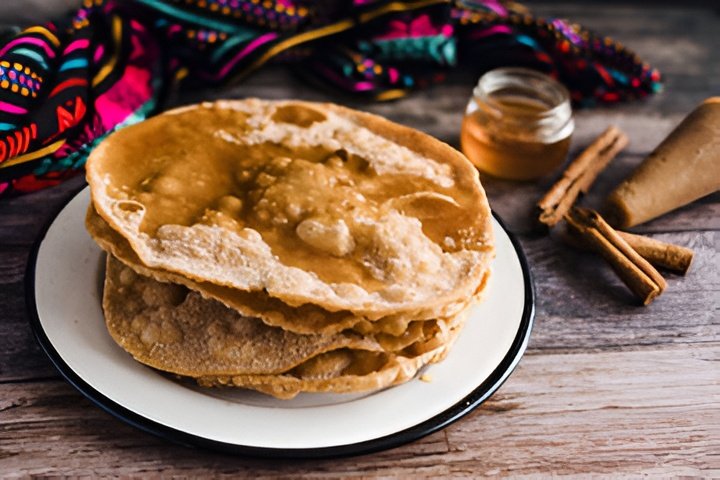

Bunuelp is what people call Mexican buñuelos, and if you have never tried one, you are genuinely missing out. A buñuelo is a thin, crispy round of fried dough coated in cinnamon sugar right after it comes out of the hot oil. The texture is light and airy — almost like a cracker — but warm, sweet, and completely addictive from the first bite. People across Mexico have been making these for generations, and the tradition stays strong because the recipe is simple and the result always delivers.
The History and Origin of Buñuelos in Mexico
The story of bunuelp goes back further than most people expect. Buñuelos did not start in Mexico — they came from Spain, and the Spanish brought them over during the colonial period in the sixteenth century. Before that, Arab cooks in Spain had already been frying sweetened dough in oil for centuries, and that idea traveled with the colonizers across the Atlantic. Over time, local people in Mexico adapted the recipe using their own ingredients and methods. What came out of that long cultural blending is the bunuelp we know today — carrying traces of Spanish, Arab, and indigenous influence all in one golden disc.
Why Buñuelos Are So Popular During the Holidays
Visit Mexico in December and you will find bunuelp everywhere — street corners, market stalls, family kitchens, and town squares. The connection between buñuelos and the holiday season runs deep and emotional, not just culinary. Families gather to make them together, with older women teaching younger ones how to roll the dough thin enough and test the oil without a thermometer. The smell of hot oil, cinnamon, and sugar fills the house and immediately signals that something festive is happening. In Oaxaca, there is even a tradition of smashing your clay bowl after eating for good luck at New Year — that kind of ritual shows how far bunuelp has woven itself into Mexican life.
The Simple Ingredients That Make Bunuelp So Good
One of the most remarkable things about bunuelp is that it asks for almost nothing in terms of ingredients. You need flour, a little sugar, baking powder, salt, butter, an egg, and warm water or milk — nothing exotic, nothing hard to find. The magic happens not in the ingredient list but in what you do with them, specifically how thin you roll the dough and how well you control the oil temperature. Some cooks add anise-flavored water or orange juice to give the dough a more complex, aromatic quality. Those small additions make a real difference without adding any difficulty to the process.
How to Make the Perfect Bunuelp Dough
Making bunuelp dough is where beginners either get it right or start to struggle, so understanding what to aim for helps a lot. You start by mixing your dry ingredients, then work in the butter with your fingers until the mixture feels like coarse, crumbly sand. After that, you stir in the beaten egg and warm liquid, then knead for three to four minutes until the dough feels smooth and no longer sticky. Divide it into equal balls, cover with a clean cloth, and let it rest for twenty full minutes. That resting step is not optional — without it, the gluten stays tight and the dough will fight you every time you try to roll it.
The Secret to Rolling Buñuelos Paper Thin
Rolling the dough thin enough is the most important skill in making bunuelp, and it takes a little practice to get right. The goal is a circle roughly eight to ten inches across — thin enough that you can almost see light through it when you hold it up. Use a rolling pin and work from the center outward, turning the dough frequently and pushing it a little further each time. Some experienced cooks stretch it over their knee the way tortilla makers work their dough. Small tears are completely fine — what matters is overall thinness, not a perfect shape.
Frying Bunuelp to Golden Perfection
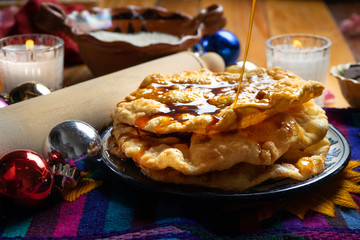
Frying is where bunuelp truly comes to life, and oil temperature is everything here. You want the oil at around one hundred seventy-five degrees Celsius — drop a small piece of dough in and it should sizzle and float within a second. When a rolled disc goes into the hot oil, it puffs and bubbles almost immediately, and you only need about thirty to forty-five seconds per side before it turns pale gold and crispy. Fry one at a time and give each disc enough room to lay flat. Crowding the pan drops the temperature and leads to greasy, uneven results.
The Cinnamon Sugar Coating That Makes Everything Better
The cinnamon sugar coating on bunuelp is not just decoration — it is what transforms the whole thing from a fried disc into an actual treat. While each buñuelo is still warm from the oil, you press it into a shallow dish of mixed cinnamon and sugar, and the warmth makes the sugar cling and form a light, fragrant crust that cracks when you bite through it. Most cooks use about one tablespoon of cinnamon per half cup of sugar — enough to taste clearly without turning bitter. Coat each buñuelo immediately after frying while it is still hot, because once it cools the sugar simply will not stick properly.
Regional Variations of Bunuelp Across Mexico
Mexico is large and diverse, and bunuelp looks and tastes different depending on where you find it. In central Mexico and cities like Mexico City, buñuelos are flat, dry, and coated in cinnamon sugar — the version most people know first. In Oaxaca, they are softer and served in warm piloncillo syrup with cinnamon and sometimes guava, making them more of a spoonable dessert than a handheld snack. In the north, they tend to be thicker and chewier, eaten with honey or cajeta instead. Along the Pacific coast, some cooks add coconut or tropical fruit to the mix. All of these variations are genuinely good, and each one reflects a different community making the recipe their own.
Bunuelp and the Piloncillo Syrup Tradition
The piloncillo syrup version of bunuelp deserves its own moment because it is so different from the dry version and arguably more festive. Piloncillo is unrefined cane sugar with a deep, molasses-rich flavor that white sugar simply cannot replicate — it tastes darker, more complex, with notes of caramel and a slight earthiness. You simmer it in water with a cinnamon stick, a few cloves, and sometimes star anise until it becomes a glossy, fragrant syrup. Pour it hot over a buñuelo in a clay bowl and the edges soften while the center stays crispy. In Oaxacan tradition, you finish eating and then smash the bowl on the ground — a joyful, slightly chaotic ritual that marks the arrival of the new year.
Common Mistakes People Make When Making Bunuelp
A few mistakes come up again and again for first-time buñuelo makers, and knowing them in advance saves real frustration. The most common one is skipping the dough resting time — twenty minutes feels long, but without it the dough will keep springing back when you try to roll it thin. The second is frying in oil that is not hot enough, which leads to greasy, heavy discs instead of light, crispy ones. Rolling the dough too thick is another one — push past the discomfort and roll it thinner than feels natural. Finally, waiting too long to add the cinnamon sugar means a cooled surface that the sugar will not stick to, so always coat immediately after frying.
How to Store Buñuelos and Keep Them Crispy
Bunuelp is best eaten fresh — ideally within the first hour out of the fryer. No storage method fully preserves that just-fried crunch, but you can slow the decline. Let them cool completely before storing, because trapping warm buñuelos in a container creates steam that turns them soft. Once cooled, stack them in an airtight container lined with paper towels and keep them at room temperature, not in the fridge. When you want to eat leftovers, spread them on a baking sheet and warm them in the oven at one hundred eighty degrees Celsius for five to eight minutes. They will not be exactly the same as fresh, but they will be genuinely enjoyable again.
The Cultural Meaning Behind Bunuelp at Christmas and New Year
Eating bunuelp during the Mexican holidays is not just about enjoying a snack — it connects you to a tradition repeated by millions of families across generations. Christmas and New Year’s Eve are the peak season for buñuelos, and the smell of frying dough and cinnamon has become so closely tied to those celebrations that it triggers immediate nostalgia in many Mexicans, even when they are far from home. Street vendors set up in town squares throughout December, and lines form quickly because people know a fresh buñuelo from a skilled vendor is worth the wait. Families who make them at home treat the process as a social event — a reason to gather, talk, and teach. That continuity is the deeper meaning behind bunuelp, and it explains why this humble food has survived for centuries.
Bunuelp as Street Food — What to Expect
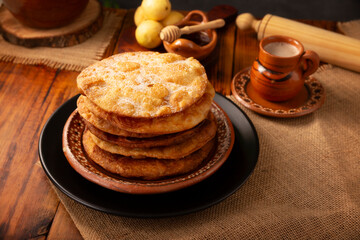
Eating bunuelp as street food is a completely different experience from making it at home, and if you get the chance to buy one from a skilled vendor in Mexico, take it. Street vendors who specialize in buñuelos have often been doing it for years, and the speed and rhythm they develop is genuinely impressive to watch — rolling, frying, and coating in a fluid, practiced sequence. The buñuelos they sell are often larger than the ones made at home, sometimes twelve inches across, and served flat in paper or folded into a cone. The price is almost always very affordable, which is part of why buñuelos became street food in the first place. Eating one on a cool December night in a Mexican town square is a small experience that stays with you.
Bunuelp Compared to Similar Treats Around the World
Once you understand bunuelp, you start noticing similar fried dough traditions in cultures all over the world. Spanish churros are close relatives — fried, coated in cinnamon sugar, beloved at celebrations — but churros are extruded and chewy inside while buñuelos are rolled thin and cracker-crispy. Indian jalebi shares the fried-in-syrup concept but ends up in completely different flavor territory. American funnel cake has a strong family resemblance, with its irregular fried shape and powdered sugar coating. Polish faworki and Italian frappe are also strikingly similar — thin fried dough dusted with sugar — which traces back to the same European heritage Spain brought to the Americas. What makes bunuelp distinct is the specific combination of paper-thin texture, cinnamon coating, and its deep roots in Mexican holiday culture.
Tips From Experienced Cooks for Better Bunuelp Every Time
People who have made bunuelp for years have accumulated practical tricks that do not always appear in written recipes. First, always use warm liquid in the dough — warm water or milk makes the gluten develop more gently and produces a softer, easier-to-roll dough. Second, let the rolled discs rest for a minute or two on the counter before frying, because this brief pause helps them hold their shape in the oil. Third, watch your oil temperature between batches and give it time to recover, since adding cold dough cools the oil noticeably. Fourth, coat each buñuelo in cinnamon sugar the moment it leaves the oil, not after they are all done. Fifth, always make more than you think you need — they disappear much faster than anyone expects.
Making Bunuelp With Kids — A Family Activity Worth Trying
Bunuelp is one of those recipes that is genuinely fun to make with children, not in a simplified or patronizing way but in a real, hands-on, satisfying way. Kids can help mix the dough, take turns kneading, try rolling even if the results are imperfect, and help with the cinnamon sugar coating at the end, which is delightfully messy. The process teaches them patience — specifically that the dough resting time matters and is worth waiting for — as well as the connection between effort and reward. Parents and grandparents who grew up making buñuelos during the holidays often say those kitchen memories are among their strongest and most positive from childhood. Starting this tradition with your own family is something that will likely be remembered for years.
Health Perspective on Eating Bunuelp
Bunuelp is fried food, and there is no point pretending otherwise. But eating it the way it was designed — as an occasional festive treat rather than a daily habit — puts it in a perfectly reasonable place in any balanced diet. The dough is relatively low in fat before frying, made mostly from flour, a small amount of butter, and one egg, and the brief frying time means properly made buñuelos do not absorb excessive oil when the temperature is right. The cinnamon sugar adds sugar, but the total per buñuelo is not dramatically different from a standard cookie. Cinnamon also happens to have documented benefits for blood sugar regulation — a small upside in an otherwise indulgent treat. Enjoy it for what it is, make it well, and share it freely.

Where to Find Authentic Bunuelp Outside of Mexico
If you live outside Mexico and want authentic bunuelp without making it yourself, look for Mexican panaderías rather than chain restaurants. In cities with large Mexican communities — Los Angeles, Chicago, Houston, Dallas — traditional bakeries often make buñuelos during the holiday season from November through January. Mexican street food festivals and cultural events are another excellent source, since vendors at these gatherings bring specialties that restaurant menus rarely feature. Some Mexican grocery stores stock pre-made buñuelos in plastic bags, and while packaged versions are not the same as fresh, they give you a decent sense of the flavor. The best option, though, is always to make them at home — fresh bunuelp made with care beats any packaged version without question.
Conclusion
After covering the history, the technique, the variations, and the culture behind bunuelp, it should be clear that this is not a one-time novelty recipe. The ingredients are inexpensive, the process is straightforward once you understand the key steps, and the result is something that almost everyone finds genuinely delicious. Buñuelos scale well — you can make a small quiet batch for a weeknight treat or a large one for a party, and the recipe adjusts cleanly either way. There is also no rule that says you can only make them in December. Learning bunuelp well is one of those kitchen achievements that builds real confidence, connects you to a rich tradition, and gives you something good to share with the people around you whenever the moment calls for it.
FAQs About Bunuelp
What exactly is bunuelp?
Bunuelp refers to Mexican buñuelos — thin, crispy rounds of fried dough coated in cinnamon sugar.
Why does the dough need to rest before rolling?
Resting relaxes the gluten in the flour. Without it, the dough stays tight and elastic.
Can I bake buñuelos instead of frying them?
You can, but they will not be the same. Baking produces a drier, bread-like texture instead of the light.
How long do buñuelos stay crispy after frying3?
They are best within the first hour. After that they start to soften as they absorb moisture from the air.
What is piloncillo and where can I find it?
Piloncillo is unrefined Mexican cane sugar sold in solid cone shapes with a deep, molasses-like flavor.
Read also: How ccs8887733199 Helps Companies Improve Financial Stability