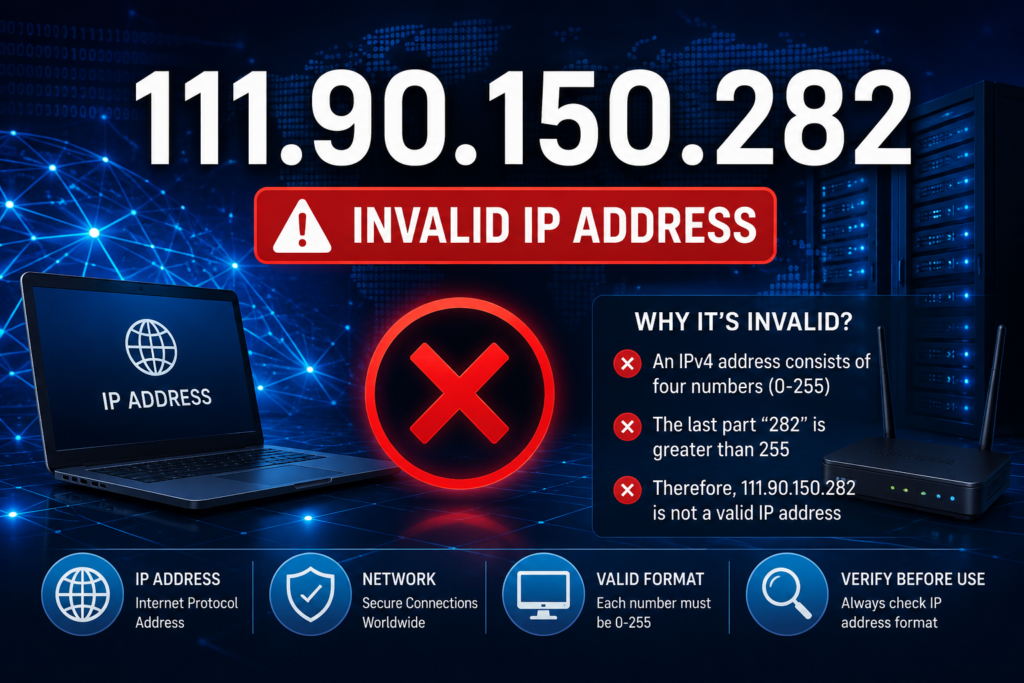

111.90.150.282 appears to be an IPv4 address because it contains four numeric sections separated by dots, but it does not meet the technical requirements of a valid IPv4 address. The first three sections—111, 90, and 150—are within the acceptable range, while the last section, 282, exceeds the maximum permitted value. Because of this single error, the address cannot function on the internet or within local computer networks.
Why Is 111.90.150.282 Invalid?
The reason 111.90.150.282 is invalid is simple but important. Every IPv4 address consists of four octets, and each octet must contain a value between 0 and 255. Since the final octet in this address is 282, it exceeds the maximum allowable number. As a result, operating systems, networking devices, browsers, routers, and servers will reject this address because it violates the IPv4 specification.
Understanding IPv4 Address Rules
IPv4 addresses use a 32-bit numbering system divided into four groups of eight bits. Each group represents one octet, allowing values from 0 to 255. This design creates more than four billion possible unique addresses. Examples of valid IPv4 addresses include 8.8.8.8, 1.1.1.1, 192.168.1.1, and 104.26.10.78. Every one of these follows the same rule: none of the four numbers exceeds 255.
Breaking Down 111.90.150.282
Looking closely at 111.90.150.282 makes it easy to identify the problem. The first octet is 111, which is valid. The second octet is 90, which is also valid. The third octet is 150, another acceptable value. The fourth octet, however, is 282, which falls outside the permitted range. Because IPv4 addresses cannot contain an octet larger than 255, the entire address becomes invalid.
How IP Addresses Work on the Internet
Every device connected to a network requires an IP address to send and receive information. Whether someone visits a website, streams a movie, checks email, or downloads a file, IP addresses help route the data between devices. Routers examine destination IP addresses and determine the most efficient path for delivering packets. If an address is invalid, communication cannot begin because networking equipment cannot interpret the destination correctly.
Common Reasons People Encounter Invalid IP Addresses
There are several reasons someone might come across an address like 111.90.150.282. In many cases, it is simply a typing mistake where one digit was entered incorrectly. Sometimes software documentation contains examples with accidental formatting errors. Copy-and-paste mistakes may also alter valid addresses, especially when editing spreadsheets or configuration files. In rare situations, automatically generated data may contain corrupted values due to programming errors.
Can an Invalid IP Address Cause Problems?
Using an invalid address such as 111.90.150.282 can lead to connection failures, configuration errors, application crashes, or network troubleshooting confusion. If a server configuration includes an invalid IP address, the service may refuse to start. Network devices often reject invalid settings immediately, displaying an error message before allowing the configuration to be saved. Even simple command-line tools like ping or traceroute will fail because they recognize that the address does not meet IPv4 standards.
How to Verify Whether an IP Address Is Valid
The easiest way to verify an IP address is to examine each octet individually. Every section must be a whole number ranging from 0 to 255, and exactly four sections must appear, separated by periods. Many online validation tools and networking utilities automatically perform this check, but understanding the rule yourself helps identify mistakes quickly without relying on external services.
Difference Between Valid and Invalid IPv4 Addresses
A valid IPv4 address follows the required numerical limits and formatting rules, allowing devices to communicate successfully across networks. An invalid address breaks one or more of these rules, making communication impossible. For example, 111.90.150.200 would be valid because every number falls within the acceptable range, while 111.90.150.282 is invalid because one octet exceeds the maximum value.
Could 111.90.150.282 Be a Typographical Error?
Yes, that is probably the most likely explanation. Someone may have intended to type a number such as 111.90.150.182, 111.90.150.228, or 111.90.150.82 but accidentally entered 282 instead. Human typing errors are extremely common, particularly when copying IP addresses manually from documents, emails, or screenshots.
IPv4 vs IPv6
IPv4 has served as the foundation of internet communication for decades, but because the number of available IPv4 addresses is limited, IPv6 was developed to provide a vastly larger address space. IPv6 addresses use hexadecimal numbers separated by colons instead of periods, making them look very different from IPv4 addresses. Even with IPv6 adoption increasing, IPv4 remains widely used across homes, businesses, and hosting providers.
Why Networking Standards Matter
Strict networking standards ensure that every device interprets IP addresses consistently. Without these standards, routers, operating systems, and servers would struggle to determine where data should travel. The requirement that every IPv4 octet remains between 0 and 255 guarantees compatibility among billions of devices connected to the internet.
Examples of Valid IPv4 Addresses
Understanding correct examples makes spotting mistakes much easier. Addresses such as 8.8.8.8, 1.1.1.1, 9.9.9.9, 172.16.0.5, 10.0.0.25, and 192.168.0.1 all follow IPv4 formatting rules correctly because every octet stays within the required numerical range.
Practical Tips for Avoiding IP Address Errors
Whenever entering an IP address manually, it is worth taking a few extra seconds to verify each number before saving the configuration. Double-check every octet, ensure exactly four groups exist, avoid accidental spaces, and confirm that no value exceeds 255. Using automated validation tools built into operating systems or networking software can also prevent configuration mistakes before they create larger problems.
What Happens If You Try to Ping 111.90.150.282?
If you attempt to ping 111.90.150.282, most operating systems will immediately reject the command because the address is syntactically invalid. Instead of sending network packets, the system usually displays an error indicating that the IP address format is incorrect or that the destination cannot be resolved due to invalid input.
Is 111.90.150.282 Dangerous?
No, 111.90.150.282 itself is not dangerous because it is not a valid IPv4 address. Since the address cannot exist under current IPv4 rules, it cannot identify a real internet-connected device. The only potential issue is confusion during troubleshooting or configuration if someone mistakenly believes it is a legitimate address.
Best Practices for Working with IP Addresses
Whether managing a home router or maintaining enterprise infrastructure, accuracy is essential when working with IP addresses. Always validate addresses before deploying configurations, document network settings carefully, avoid manual transcription whenever possible, and use reliable management tools that automatically detect formatting errors before they affect network connectivity.
Conclusion
Although 111.90.150.282 looks like a standard IPv4 address, it is technically invalid because its final octet exceeds the maximum allowed value of 255. Understanding this simple rule makes it much easier to recognize invalid addresses, troubleshoot networking issues, and avoid configuration mistakes. Whether you are a beginner learning about networking or an experienced IT professional reviewing system settings, knowing how IPv4 addresses are structured is a valuable skill that saves time and prevents unnecessary confusion.
Frequently Asked Questions
1. Is 111.90.150.282 a valid IP address?
No. The final octet is 282, which exceeds the maximum allowed value of 255.
2. Why can’t an IPv4 address contain 282?
Each IPv4 octet is limited to values between 0 and 255 because it represents eight bits of data.
3. Can I ping 111.90.150.282?
No. Most operating systems will reject the address before attempting any network communication.
4. What makes an IPv4 address valid?
It must contain exactly four numerical sections separated by periods, with each section ranging from 0 to 255.
5. Could 111.90.150.282 simply be a typo?
Yes. It is highly likely that the final octet was entered incorrectly.
Read also: THFLOBLL How to Verify and Handle Unrecognized Transactions