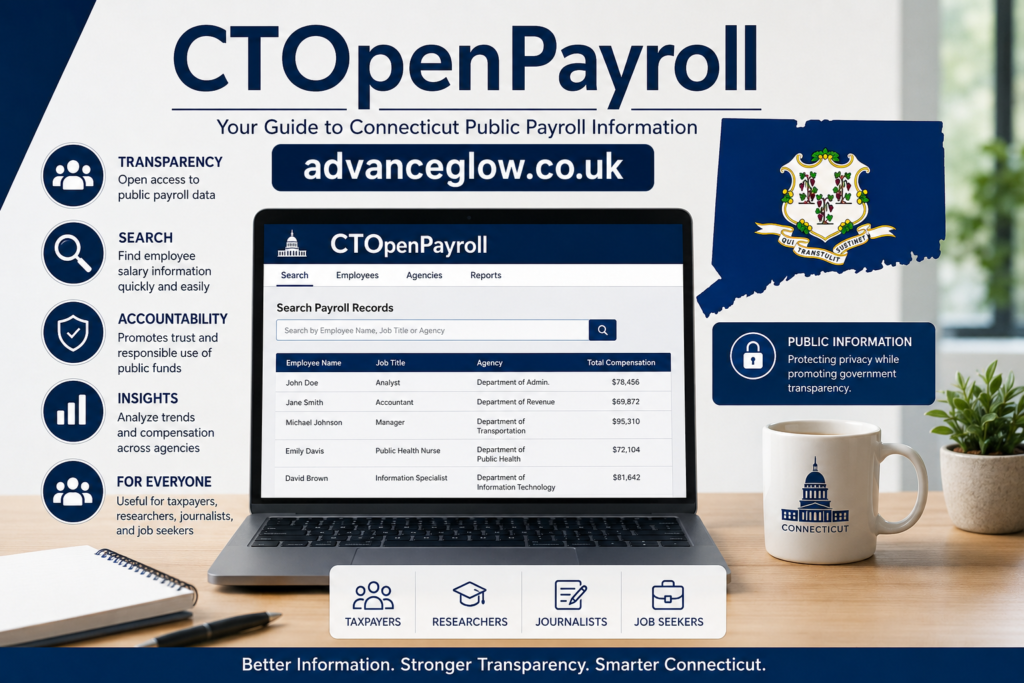

CTOpenPayroll refers to an online payroll database that provides information about compensation for state employees in Connecticut. What it means is that payroll information is available for public viewing instead of remaining hidden. This allows people to understand how tax money supports government workers and helps build confidence in public spending. The platform makes complex payroll information much easier to understand.
Why CTOpenPayroll Was Created
Governments often create public information systems to improve transparency and accountability. CTOpenPayroll was developed so citizens can easily review salary information without requesting official documents. What it means is that important payroll data becomes available through a simple online search. This saves time for both government offices and the public while encouraging openness.
How CTOpenPayroll Works
The ctopenpayroll database collects payroll records from government sources and organizes them into searchable categories. Users can usually search by employee name, department, or agency. What it means is that finding payroll information becomes much faster than searching through paper records. The system organizes large amounts of data into an easy-to-use format.
Information Available in CTOpenPayroll
CTOpenPayroll usually includes employee names, job titles, departments, salary details, overtime payments, and total compensation where applicable. What it means is that users receive a broader picture of employee earnings instead of seeing only one salary number. This detailed information supports better public understanding of government payroll expenses.
Who Uses CTOpenPayroll
Many different people benefit from ctopenpayroll. Journalists use it while preparing news stories about public spending. Researchers analyze salary trends over time. Job seekers compare government salaries before applying for positions. Taxpayers review how public funds are distributed. What it means is that the database serves many purposes beyond simple curiosity.
Benefits of Payroll Transparency
Transparency builds trust between governments and citizens. CTOpenPayroll allows taxpayers to see how government salaries are funded. What it means is that public agencies become more accountable because financial information is easier to review. Open access also encourages responsible budgeting and informed public discussions about spending.
How CTOpenPayroll Supports Research
Researchers often study payroll information to understand employment trends, salary growth, workforce planning, and government spending. CTOpenPayroll provides organized information that makes these studies easier. What it means is that educational institutions, economists, and policy experts can use real payroll data instead of estimates when preparing reports.
How Job Seekers Can Benefit
People searching for government jobs often want to know expected salaries before applying. CTOpenPayroll gives applicants a better understanding of compensation levels for different positions. What it means is that candidates can make informed career decisions by comparing available public salary information with their own expectations and qualifications.
Understanding Salary Information
Salary figures may include base pay, overtime, bonuses where applicable, and other forms of compensation. What it means is that the total amount shown may differ from a person’s regular annual salary. Understanding these differences helps users avoid confusion when reviewing payroll records in ctopenpayroll.
Importance of Accurate Payroll Records
Accurate payroll information protects both employees and taxpayers. CTOpenPayroll depends on reliable government records so users receive trustworthy information. What it means is that correct payroll data supports fair reporting, accurate budgeting, and informed public discussions about government employment costs.
Privacy and Public Information
Although ctopenpayroll shares payroll information, it does not reveal every personal detail about employees. Governments balance transparency with privacy by publishing only information allowed under public record laws. What it means is that salary information remains available while sensitive personal data stays protected.
Common Reasons People Search CTOpenPayroll
People search ctopenpayroll for many reasons. Some compare salaries across agencies. Others verify employment information or study government spending. Journalists investigate financial trends, while students learn about public administration. What it means is that the platform supports education, research, career planning, and public awareness.
How CTOpenPayroll Encourages Accountability
Public access to payroll records encourages responsible financial management. Government agencies know that payroll information can be reviewed by the public. What it means is that transparency creates stronger accountability and helps maintain confidence in public institutions that manage taxpayer money.
Understanding Payroll Trends
Payroll databases make it easier to identify salary changes over time. Researchers can study hiring patterns, overtime trends, and compensation growth. What it means is that long-term payroll information provides valuable insights into workforce planning and government financial management.
Advantages of Using CTOpenPayroll
CTOpenPayroll offers quick access to organized payroll information. Users save time because they can search records without requesting printed documents. What it means is that valuable payroll information becomes more accessible, helping people make informed decisions based on reliable public records.
Limitations Users Should Understand
Although ctopenpayroll contains useful information, users should remember that payroll records represent official reporting periods and may not explain every detail of employee compensation. What it means is that understanding the context behind payroll numbers helps users interpret the information correctly and avoid incorrect conclusions.
Tips for Reading Payroll Data
When reviewing payroll information, compare job titles, departments, and compensation categories carefully instead of focusing only on one salary figure. What it means is that accurate comparisons require looking at the complete payroll record because overtime and additional compensation may affect total earnings.
The Future of CTOpenPayroll
Public payroll databases continue to improve as technology advances. Future updates may offer faster searches, improved data organization, and better reporting tools. What it means is that ctopenpayroll will likely become even more useful for researchers, taxpayers, journalists, and anyone interested in government transparency.
Conclusion
CTOpenPayroll plays an important role in making government payroll information easier to understand. It supports transparency, accountability, research, and informed decision-making by providing public access to payroll records. What it means is that citizens gain greater insight into how public funds are used while governments strengthen trust through open access to financial information.
Frequently Asked Questions
What is ctopenpayroll
CTOpenPayroll is a public database that provides payroll information for Connecticut state employees.
Is ctopenpayroll free to use
Yes. Public payroll information is generally available without any cost.
Why do people use ctopenpayroll
People use it for research, salary comparisons, journalism, career planning, and understanding government spending.
Does ctopenpayroll show private personal information
No. It mainly displays payroll information that is legally available as a public record while protecting sensitive personal details.
Is ctopenpayroll useful for job seekers
Yes. Job seekers can use it to learn about salary ranges and compensation for many government positions before applying.
Read also: upcvee6s5ku Modern Cyber Security and Digital Protection